Skip to content
Brooke ColterThe Quiet Road Field Guides

Van-life safety · Brooke Colter

Know when to stay, move, or change the plan

I spent twenty-seven years as a park ranger, answering questions about overnight parking and helping people through trouble on the road. This handbook puts the decisions in order: read the place, check the rules, count the costs, and leave yourself a way to get help.

PDF

57 Pages · 8 Chapters · 3 Methods · 2 Tables · 3 Checklists

Brooke Colter
Sleep Well, Stay Legal

PDF e-book · 57 pages · 8 chapters

57Pages
$19Your order

The book

Sleep Well, Stay Legal

Sleep Well, Stay Legal

The book / 01

Sleep Well, Stay Legal

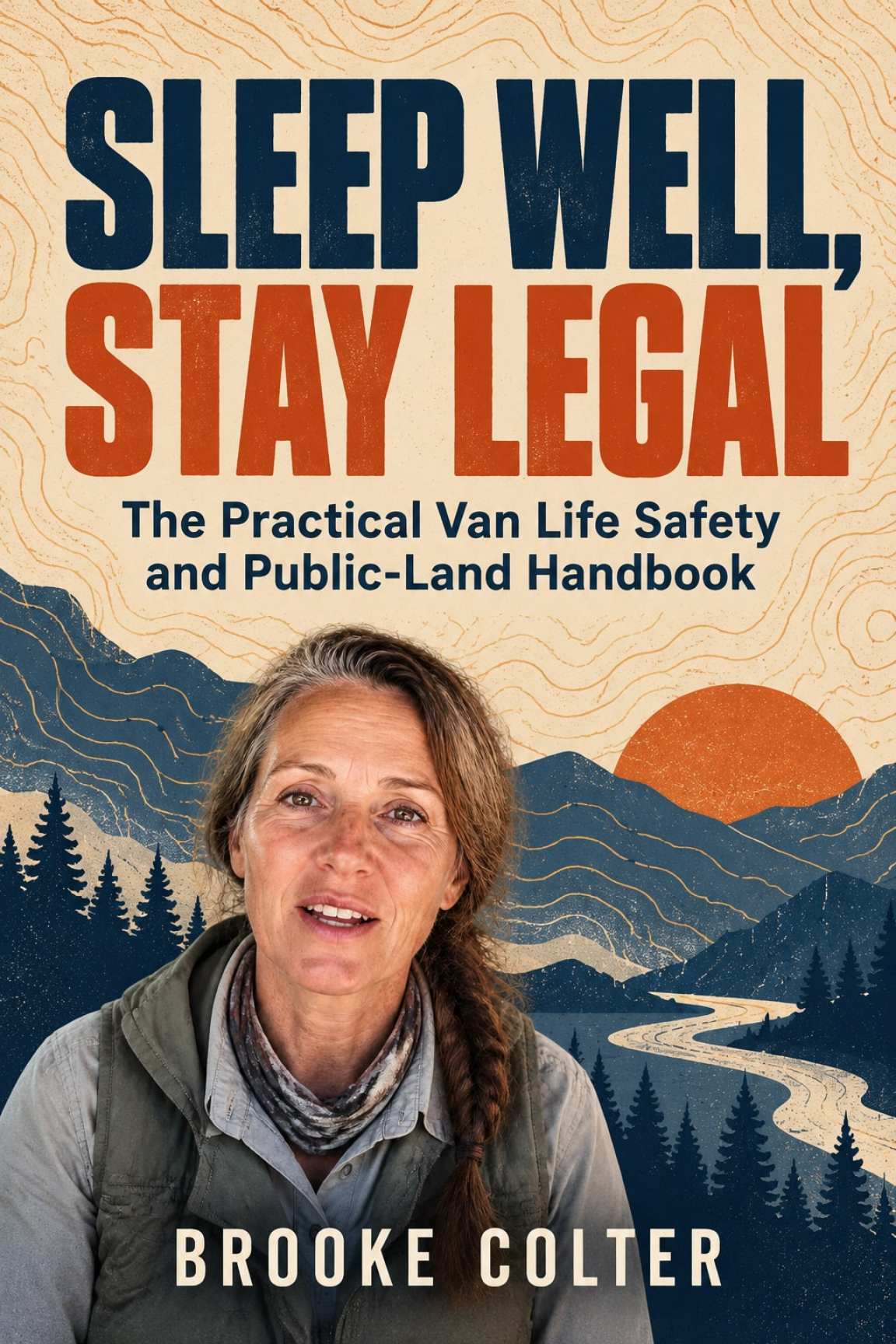
The Practical Van Life Safety and Public-Land Handbook

Before heading farther from help, check the forecast, assistance distance, vehicle condition, exit route, and who knows your plan.

Sleep Well, Stay Legal is my practical handbook for deciding where to park, when to move, and what to do when the plan changes. It starts with weather, terrain, fire and smoke, and the clues a campsite can leave in plain sight. Then it turns to land ownership, public-land rotations, town ordinances, and asking permission before staying. I also cover the costs that free camping can hide, water and waste routines, and preparing for vehicle trouble or isolation. Across eight chapters, two tables, and three checklists, the book offers a sequence for making calmer calls, informed by my years as a ranger and life in a converted camper van.

Selected chapters

  1. Freedom Has a Schedule
  2. Read the Place Before You Park
  3. Know Who Owns the Ground
  4. Sleep in Town Without Guessing
  5. Make the Money Work
  6. Water, Waste, and the Weekly Reset
  7. When the Plan Breaks
  8. Leave the Place Better

The Quiet Road Field Guides

The small decisions that shape a night on the road

A place can look easy until the forecast shifts, the road narrows, or you find out overnight parking is prohibited. These are ordinary decisions, but they deserve more than a guess.

  • You find a flat, shady pullout and wonder whether water, wind, road access, or a closure explains why it is empty.
  • You are tired in town, but do not know whether the street allows overnight parking or where you can legally relocate.
  • A free campsite adds a long detour, fuel use, and a rough road to the day’s calculation.
  • Your water is running low, waste needs handling, and several errands are competing for another drive.

Selected chapters

Three useful places to begin

The chapters follow the decisions of a trip, but you can start with the question in front of you.

  1. Read the Place Before You Park

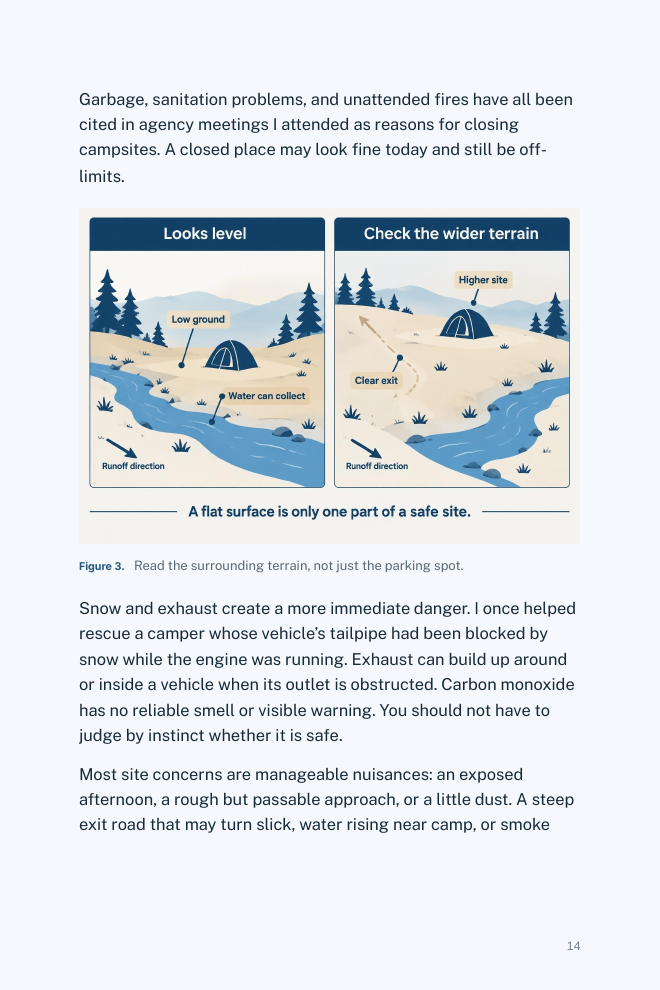
    Check the forecast, fire and smoke information, access road, and terrain. Look for signs of runoff, then ask what could change while you are there.

  2. Know Who Owns the Ground

    Identify the landowner, legal classification, and permitted duration before settling in. Use the chapter’s approach to public-land rotations and asking permission.

  3. Sleep in Town Without Guessing

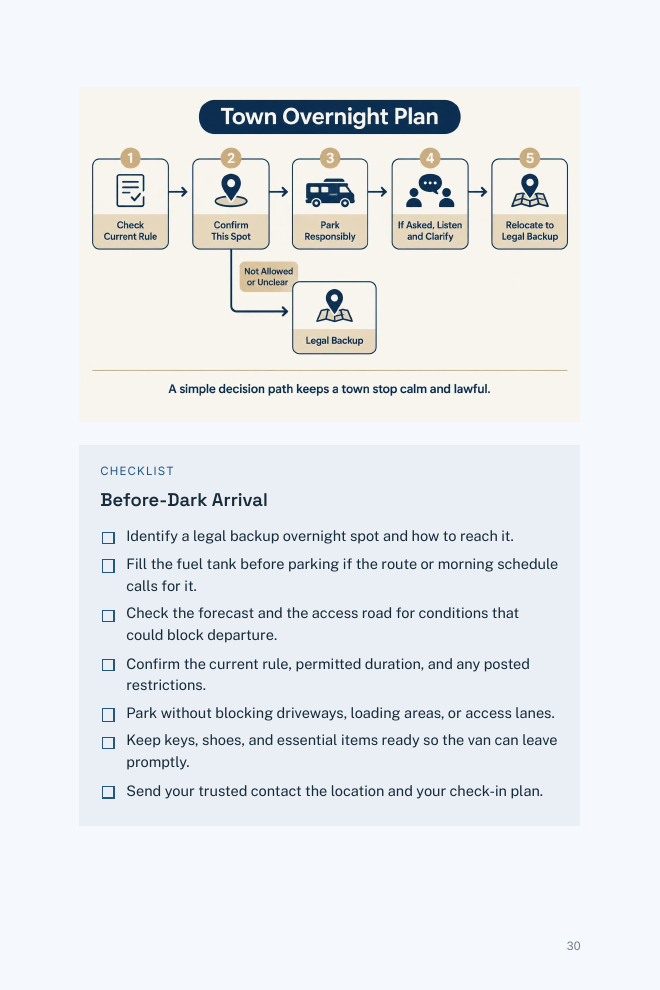
    Search local overnight-parking rules, choose an alternative before dark, and make a plan for an official knock. If the rules remain unclear, the book describes calling the non-emergency number.

Look inside

Read a page before you decide

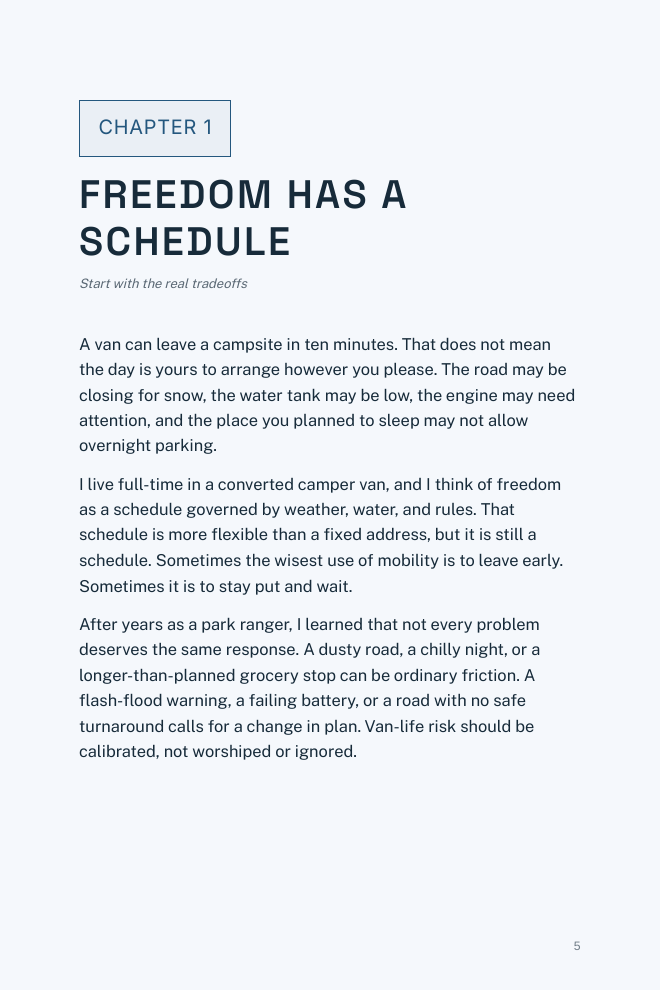
Open a page and read the opening of “Freedom Has a Schedule.” It compares manageable inconveniences with conditions that call for reassessment, then shares Brooke’s early creek-side mistake. The book also includes interior page previews to explore.

57 Pages · 8 Chapters · 3 Methods · 2 Tables · 3 Checklists

Page 5 — Freedom Has a Schedule
Page 5 — Freedom Has a Schedule ↗
Page 14 — Read the Place Before You Park
Page 14 — Read the Place Before You Park ↗
Page 30 — Sleep in Town Without Guessing
Page 30 — Sleep in Town Without Guessing ↗
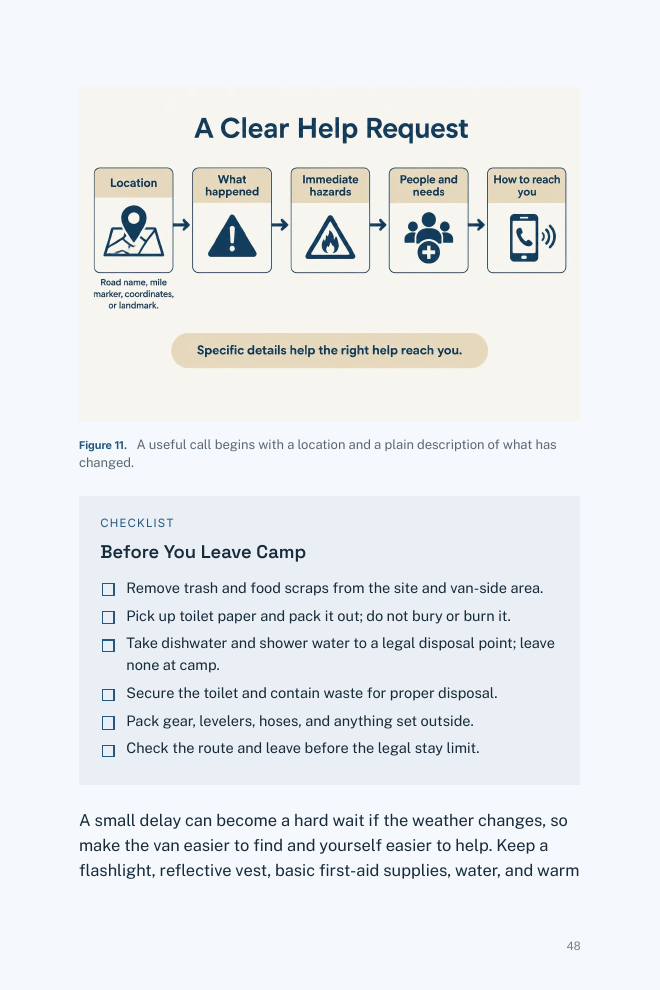
Page 48 — When the Plan Breaks
Page 48 — When the Plan Breaks ↗
Brooke Colter

From Brooke

A ranger’s view, from the driver’s seat

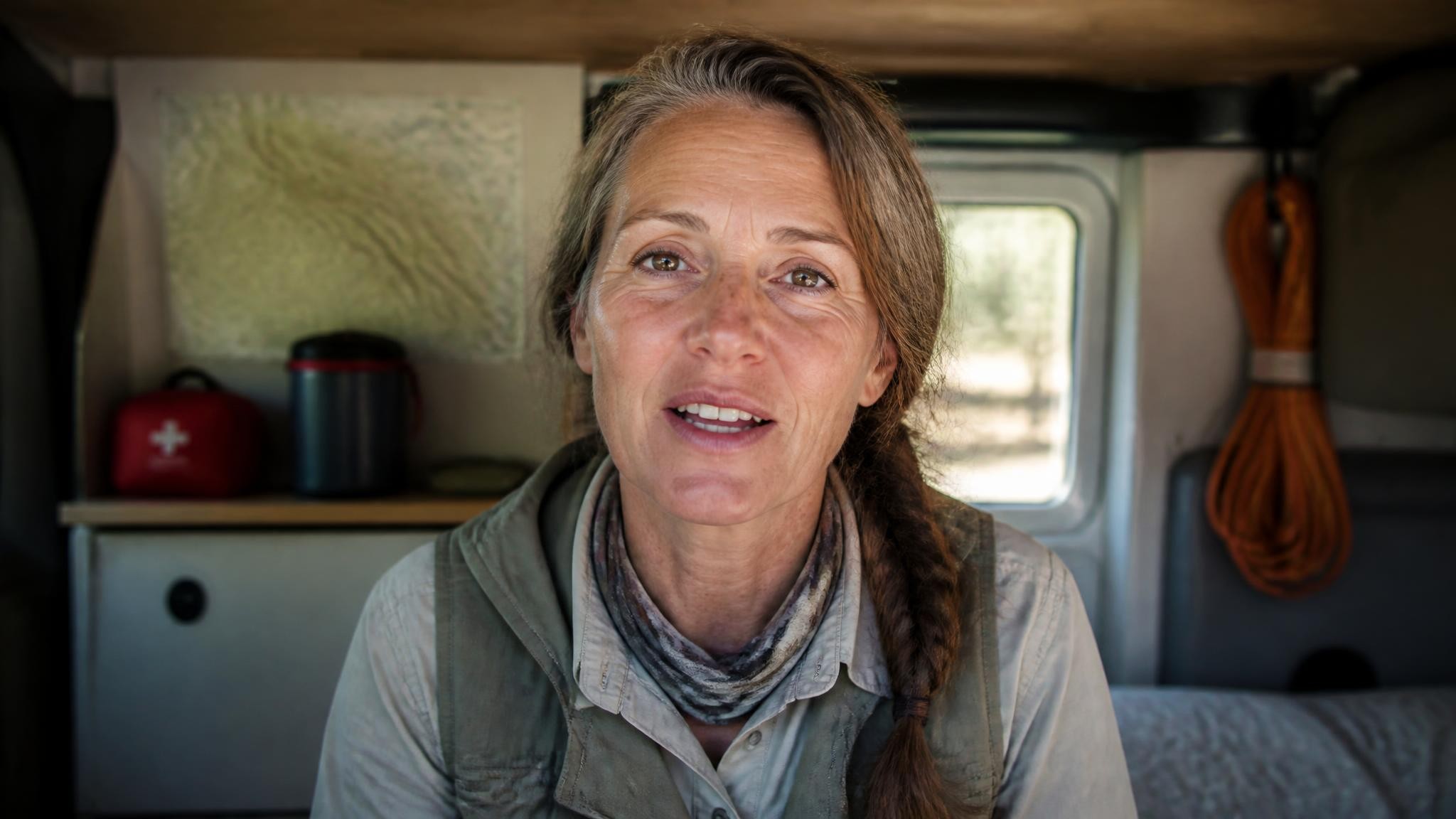
I spent twenty-seven years as a park ranger, doing backcountry patrol, visitor education, and search-and-rescue. I answered questions about overnight vehicle sleeping as often as a dozen times a day. Some nights I turned tired travelers away from full campgrounds; other times, when people were cooperative, I could offer a map, a little time, and directions to a better legal place.

I now live full-time in a converted camper van and roam the American West. I left ranger work near retirement because my projected finances on a ranger’s pay were not sustainable. I write about the practical parts: weather, water, rules, repairs, and the difference between a real warning and online fear. I share my own mistakes, too. A book cannot choose your campsite for you, but it can help you ask better questions before you park.

— Brooke Colter

This is for you if

Who I wrote this for

This is for you if

  • You want a practical way to think through overnight parking, campsite conditions, and changing plans.
  • You are willing to check current forecasts and local rules rather than treat a handbook as permission to stay.
  • You would rather prepare for realistic trouble than treat every inconvenience as an emergency.

What this book will not do

  • It is not a substitute for local rules: changing streets does not make prohibited overnight parking legal.
  • It is not a substitute for judgment: know how your device works, keep it charged, and use SOS for a genuine emergency, not a routine tow request.

What you get

One practical handbook for the road

Sleep Well, Stay Legal is a 57-page PDF e-book with eight chapters, two tables, and three checklists. It covers site assessment, overnight rules, budgeting, water and waste, and what to do when a plan breaks.

Sleep Well, Stay Legal

Your order

Sleep Well, Stay Legal

$19

PDF e-book · 57 pages · 8 chapters

57 Pages · 8 Chapters · 3 Methods · 2 Tables · 3 Checklists

  • Sleep Well, Stay Legal · 57 · PDF
Get the book $19

PDF

The Quiet Road Field Guides

Put a steadier routine on the road

AI-generated illustrations of potential readers.

You are planning your first overnight

Use the site-reading and legal-parking chapters to check the place, find the rules, and choose an alternative before dark.

AI-generated illustrations of potential readers.

You want free camping to fit the budget

Compare the hidden costs of extra miles with paid campsites, repairs, fuel, and the weekly work of water, groceries, laundry, and waste.

AI-generated illustrations of potential readers.

You travel beyond easy cell coverage

Work through a safety check for weather, distance from help, vehicle condition, an exit route, and telling someone your plan.

AI-generated illustrations of potential readers.

The Quiet Road Field Guides

Questions

Is this useful if I have never traveled in a van?

Yes. The book follows everyday decisions such as choosing a campsite, checking overnight rules, planning water and waste, and weighing fuel against a free site. It is also relevant if you already live on the road and want a repeatable way to think through those choices.

Why pay for the book when your YouTube videos are free?

The book puts the material in a complete, ordered path from reading a campsite through leaving it better. It includes three checklists and two tables you can return to while planning; a video can explain an idea, but it cannot hand you that same organized reference on the page.

What does the book cover?

Its eight chapters address weather and site assessment, land ownership and public-land rotations, town overnight parking, fuel and paid campsites, water and waste routines, vehicle trouble, and respectful camping habits.

What is the file format?

This book is available as a PDF e-book.

Does the book tell me whether a specific street or campsite is legal?

No. Local rules vary, and the book explains how to identify who manages a place and what rules to check. Confirm current local requirements before staying.

Does the safety advice mean I should call SOS for a tow?

No. The book says to know how your device works and keep it charged; SOS is for a genuine emergency, not a routine tow request. It also encourages making a plan for vehicle trouble and communication.

What if I am uncertain whether a campsite is safe?

The book encourages checking what you can, including current forecasts, alerts, terrain, roads, and exit options. Brooke’s approach is to leave a campsite whenever it feels unsafe, even without concrete evidence.

Make the next parking decision with care

Read the place, check the rules, and keep a way to change the plan. That is the practical work this book is here to help with.

Get the book $19

PDF